Articles

Edge AI Governance
When Compute Moves To The Power
<script type="application/ld+json"> { "@context": "https://schema.org", "@graph": [ { "@type": "BlogPosting", "@id": "https://www.data2.ai/blog/edge-ai-governance-compute-follows-power/#article", "headline": "Edge AI Governance: When Compute Moves To The Power", "alternativeHeadline": "Compute Is Moving To Where The Power Is. The Evidence Has To Move With It", "description": "Edge AI governance is the gap in the AI buildout. Distributed compute solves power, not proof. Watch data² and ATCO Ventures on Energy News Beat.", "url": "https://www.data2.ai/blog/edge-ai-governance-compute-follows-power", "datePublished": "2026-09-08", "dateModified": "2026-09-08", "inLanguage": "en-US", "wordCount": 1570, "image": "https://www.data2.ai/images/edge-ai-governance-compute-follows-power.png", "author": { "@type": "Person", "name": "[AUTHOR NAME]", "jobTitle": "[AUTHOR TITLE]", "worksFor": { "@id": "https://www.data2.ai/#organization" } }, "publisher": { "@id": "https://www.data2.ai/#organization" }, "about": [ { "@type": "Thing", "name": "Edge AI governance" }, { "@type": "Thing", "name": "Distributed AI compute" }, { "@type": "Thing", "name": "AI decision audit trail" }, { "@type": "Thing", "name": "Decision intelligence" } ], "mentions": [ { "@type": "Person", "name": "Jon Brewton" }, { "@type": "Person", "name": "Kyle Koss" }, { "@type": "Person", "name": "Stu Turley" }, { "@type": "Organization", "name": "ATCO Ventures" }, { "@type": "Organization", "name": "Energy News Beat" } ], "isPartOf": { "@id": "https://www.data2.ai/#website" } }, { "@type": "FAQPage", "@id": "https://www.data2.ai/blog/edge-ai-governance-compute-follows-power/#faq", "mainEntity": [ { "@type": "Question", "name": "What is edge AI governance?", "acceptedAnswer": { "@type": "Answer", "text": "Edge AI governance is the practice of keeping AI decisions accurate, traceable, and defensible when inference runs across many distributed locations rather than one central facility. It covers how a conclusion was reached, which source data supports it, and whether that reasoning can be reproduced and defended later by an auditor or regulator." } }, { "@type": "Question", "name": "Why is AI compute moving closer to power generation?", "acceptedAnswer": { "@type": "Answer", "text": "Power, not chips, is now the binding constraint on AI. New centralized capacity requires interconnect queues, three to five year build timelines, and 15 to 20 year power contracts. Modular edge data centers placed next to existing generation, including natural gas, solar, and flared gas, avoid all three and can be deployed in months." } }, { "@type": "Question", "name": "Does distributed AI compute make AI harder to audit?", "acceptedAnswer": { "@type": "Answer", "text": "Yes, without a governance layer. Distributing inference across many sites multiplies the number of places producing conclusions while creating no shared record of how they were produced. Traceability has to be built into the reasoning itself rather than added at the facility, because there is no longer a single facility to add it to." } }, { "@type": "Question", "name": "What is a Decision Record?", "acceptedAnswer": { "@type": "Answer", "text": "A Decision Record is the artifact data²'s reView platform issues for every finding. It contains the conclusion, the evidence supporting it, and the traceable path back to each source record. It is designed so a finding can be defended to executives, auditors, regulators, customers, and legal stakeholders, and reproduced months or years later." } }, { "@type": "Question", "name": "Who needs an AI decision audit trail?", "acceptedAnswer": { "@type": "Answer", "text": "Any organization where being wrong carries consequence beyond a bad quarter. In practice that means CFOs and controllers, chief audit executives and forensic teams, chief compliance and risk officers, general counsel, and government and defense program owners. Each has to show not only what was concluded but how." } } ] }, { "@type": "VideoObject", "name": "Edgeworks Revolution: Bringing AI Compute to Where Power Lives", "description": "Energy News Beat host Stu Turley talks with data² founder and CEO Jon Brewton and ATCO Ventures President Kyle Koss about modular edge data centers, AI power constraints, and keeping distributed AI decisions traceable.", "uploadDate": "2026-09-05", "embedUrl": "https://www.youtube.com/embed/C_ddxwIEUFI", "thumbnailUrl": "https://i.ytimg.com/vi/C_ddxwIEUFI/maxresdefault.jpg", "publisher": { "@type": "Organization", "name": "Energy News Beat" } }, { "@type": "Organization", "@id": "https://www.data2.ai/#organization", "name": "data²", "alternateName": "data2", "url": "https://www.data2.ai", "logo": "https://www.data2.ai/[LOGO PATH]", "description": "data² is a decision intelligence company that helps enterprises and government agencies turn fragmented data into accurate, traceable, and defensible decisions.", "founder": { "@type": "Person", "name": "Jon Brewton" }, "sameAs": [ "https://www.linkedin.com/company/data2us/", "https://www.youtube.com/@Data2ai" ] } ] } </script>

data² Partners With Memgraph to Power Decision Intelligence
10x Faster Ingestion With Full Traceability
<script type="application/ld+json"> { "@context": "https://schema.org", "@graph": [ { "@type": "NewsArticle", "@id": "https://www.data2.ai/resources/data2-partners-with-memgraph-to-power-decision-intelligence#article", "isPartOf": { "@id": "https://www.data2.ai/resources/data2-partners-with-memgraph-to-power-decision-intelligence#webpage" }, "mainEntityOfPage": "https://www.data2.ai/resources/data2-partners-with-memgraph-to-power-decision-intelligence", "headline": "data² Partners With Memgraph to Power Real-Time Decision Intelligence", "description": "data² partners with Memgraph to power reView, cutting data ingestion 10x while keeping decision intelligence traceable, auditable, and defensible.", "image": { "@type": "ImageObject", "url": "https://framerusercontent.com/images/ghSRa5q5R65wM7vJ5KpgWAJULE.png?width=1138&height=650", "width": 1138, "height": 650 }, "datePublished": "2026-08-13T09:00:00-04:00", "dateModified": "2026-08-13T09:00:00-04:00", "author": { "@type": "Organization", "name": "data²", "url": "https://www.data2.ai/" }, "publisher": { "@id": "https://www.data2.ai/#organization" }, "about": [ { "@type": "Thing", "name": "Decision Intelligence" }, { "@type": "SoftwareApplication", "name": "reView", "applicationCategory": "BusinessApplication" } ], "mentions": [ { "@id": "https://www.data2.ai/#organization" }, { "@id": "https://memgraph.com/#organization" }, { "@type": "Thing", "name": "In-memory graph database" }, { "@type": "Thing", "name": "Real-time data ingestion" } ] }, { "@type": "FAQPage", "@id": "https://www.data2.ai/resources/data2-partners-with-memgraph-to-power-decision-intelligence#faq", "mainEntity": [ { "@type": "Question", "name": "What did data² and Memgraph announce?", "acceptedAnswer": { "@type": "Answer", "text": "A partnership in which data² standardized on Memgraph's in-memory graph database to power its reView decision intelligence platform, cutting data ingestion time by more than 10x." } }, { "@type": "Question", "name": "What is reView?", "acceptedAnswer": { "@type": "Answer", "text": "reView is data²'s decision intelligence platform. It harmonizes fragmented data into auditable intelligence, so organizations can make decisions they can trace and defend." } }, { "@type": "Question", "name": "How much faster is reView after integrating Memgraph?", "acceptedAnswer": { "@type": "Answer", "text": "Data ingestion is more than 10x faster, allowing reView to work from current data in near real time instead of stale snapshots." } }, { "@type": "Question", "name": "Does the speed improvement reduce auditability?", "acceptedAnswer": { "@type": "Answer", "text": "No. reView remains traceable and auditable by design; the Memgraph integration adds speed without weakening the audit trail behind each decision." } }, { "@type": "Question", "name": "Where can reView be deployed?", "acceptedAnswer": { "@type": "Answer", "text": "reView runs across cloud, on-premises, and air-gapped environments, making it suitable for regulated industries and government operations." } }, { "@type": "Question", "name": "Why does data² use a graph database?", "acceptedAnswer": { "@type": "Answer", "text": "Decisions depend on relationships between data sources. A graph database lets reView model and traverse those relationships in real time, which a traditional relational database handles far less efficiently." } } ] }, { "@type": "Organization", "@id": "https://www.data2.ai/#organization", "name": "data²", "url": "https://www.data2.ai/", "sameAs": [ "https://www.linkedin.com/company/data2us/", "https://www.youtube.com/@Data2ai" ] }, { "@type": "Organization", "@id": "https://memgraph.com/#organization", "name": "Memgraph", "url": "https://memgraph.com/" } ] } </script>
Decision Intelligence, Explained
How it differs from BI & LLMs
<script type="application/ld+json"> { "@context": "https://schema.org", "@graph": [ { "@type": "Article", "@id": "https://www.data2.ai/resources/decision-intelligence-explained#article", "isPartOf": { "@id": "https://www.data2.ai/resources/decision-intelligence-explained#webpage" }, "mainEntityOfPage": "https://www.data2.ai/resources/decision-intelligence-explained", "headline": "Decision Intelligence, Explained", "description": "Decision intelligence turns data into defensible, auditable decisions—not just dashboards. Learn how it differs from BI and LLMs, and how reView works.", "image": { "@type": "ImageObject", "url": "https://framerusercontent.com/images/xiF9ckfqYfiBV1kIXsFqLSgCIvQ.png" }, "datePublished": "2026-07-30T09:00:00-04:00", "dateModified": "2026-07-30T09:00:00-04:00", "author": { "@type": "Organization", "name": "data²", "url": "https://www.data2.ai/" }, "publisher": { "@id": "https://www.data2.ai/#organization" }, "about": [ { "@type": "Thing", "name": "Decision Intelligence" }, { "@type": "SoftwareApplication", "name": "reView", "applicationCategory": "BusinessApplication" } ], "mentions": [ { "@id": "https://www.data2.ai/#organization" }, { "@type": "Thing", "name": "Business Intelligence" }, { "@type": "Thing", "name": "Explainable AI" }, { "@type": "Thing", "name": "Decision Record" } ] }, { "@type": "FAQPage", "@id": "https://www.data2.ai/resources/decision-intelligence-explained#faq", "mainEntity": [ { "@type": "Question", "name": "What is decision intelligence?", "acceptedAnswer": { "@type": "Answer", "text": "Decision intelligence is a discipline and a category of software that combines data, machine reasoning, and business rules to recommend and support decisions." } }, { "@type": "Question", "name": "How is decision intelligence different from business intelligence (BI)?", "acceptedAnswer": { "@type": "Answer", "text": "BI describes the past; decision intelligence produces a decision you can act on and later defend." } }, { "@type": "Question", "name": "How is decision intelligence different from an LLM or RAG tool?", "acceptedAnswer": { "@type": "Answer", "text": "Evidence-grade decision intelligence adds the missing layers: reasoning over evidence, conflict resolution, calibrated confidence, provenance to the governing rule, and a signed, immutable record." } }, { "@type": "Question", "name": "What does \"explainable decision intelligence\" mean?", "acceptedAnswer": { "@type": "Answer", "text": "Explainable decision intelligence means the system can show its work - not as a probability heatmap, but as a traceable chain from source data to conclusion." } }, { "@type": "Question", "name": "What makes a decision \"defensible\"?", "acceptedAnswer": { "@type": "Answer", "text": "A defensible decision is one you can reproduce and justify after the fact - to an auditor, a regulator, or opposing counsel." } }, { "@type": "Question", "name": "What is a Decision Record?", "acceptedAnswer": { "@type": "Answer", "text": "A Decision Record is the signed artifact reView produces for every conclusion. It contains nine elements." } }, { "@type": "Question", "name": "Can decision intelligence run in secure or air-gapped environments?", "acceptedAnswer": { "@type": "Answer", "text": "Yes. reView supports on-premises, air-gapped, and edge deployment, so your data stays where it lives." } } ] }, { "@type": "Organization", "@id": "https://www.data2.ai/#organization", "name": "data²", "url": "https://www.data2.ai/", "sameAs": [ "https://www.linkedin.com/company/data2us/", "https://www.youtube.com/@Data2ai" ] } ] } </script>

Stop Revenue Leakage
Why Invoice Integrity Is Your First Defense
<script type="application/ld+json"> { "@context": "https://schema.org", "@graph": [ { "@type": "Article", "@id": "https://www.data2.ai/resources/stopping-revenue-leakage#article", "isPartOf": { "@id": "https://www.data2.ai/resources/stopping-revenue-leakage#webpage" }, "mainEntityOfPage": "https://www.data2.ai/resources/stopping-revenue-leakage", "headline": "Stop Revenue Leakage", "description": "Revenue leakage quietly drains 2-10% of revenue through billing errors. See the causes and how explainable AI verifies every invoice to recover it.", "image": { "@type": "ImageObject", "url": "https://framerusercontent.com/images/ez7HvGvfFTwjvFjPC7AZ7Etwjw.png?width=1138&height=650", "width": 1138, "height": 650 }, "datePublished": "2025-12-14T09:00:00-05:00", "dateModified": "2025-12-14T09:00:00-05:00", "author": { "@type": "Organization", "name": "data²", "url": "https://www.data2.ai/" }, "publisher": { "@id": "https://www.data2.ai/#organization" }, "about": [ { "@type": "Thing", "name": "Revenue Leakage" }, { "@type": "SoftwareApplication", "name": "reView", "applicationCategory": "BusinessApplication" } ], "mentions": [ { "@id": "https://www.data2.ai/#organization" }, { "@type": "Thing", "name": "Invoice Integrity" }, { "@type": "Thing", "name": "Explainable AI" }, { "@type": "Thing", "name": "Billing Errors" } ] }, { "@type": "Organization", "@id": "https://www.data2.ai/#organization", "name": "data²", "url": "https://www.data2.ai/", "sameAs": [ "https://www.linkedin.com/company/data2us/", "https://www.youtube.com/@Data2ai" ] } ] } </script>

Understanding Before Approving
The Future of Permitting
<script type="application/ld+json"> { "@context": "https://schema.org", "@graph": [ { "@type": "Article", "@id": "https://www.data2.ai/resources/understanding-before-approving#article", "isPartOf": { "@id": "https://www.data2.ai/resources/understanding-before-approving#webpage" }, "mainEntityOfPage": "https://www.data2.ai/resources/understanding-before-approving", "headline": "Understanding Before Approving", "description": "Digitizing permitting portals isn't enough. See why permitting is now a strategic national capability—and how decision intelligence closes the delays.", "image": { "@type": "ImageObject", "url": "https://framerusercontent.com/images/veDCkJcIC2k1mWWjYJVuUUpFibE.png?width=1138&height=650", "width": 1138, "height": 650 }, "datePublished": "2025-12-14T09:00:00-05:00", "dateModified": "2025-12-14T09:00:00-05:00", "author": { "@type": "Person", "name": "Jason Marceau", "jobTitle": "Head of Product Solutions", "worksFor": { "@id": "https://www.data2.ai/#organization" } }, "publisher": { "@id": "https://www.data2.ai/#organization" }, "about": [ { "@type": "Thing", "name": "Permitting" }, { "@type": "Thing", "name": "Decision Intelligence" }, { "@type": "SoftwareApplication", "name": "reView", "applicationCategory": "BusinessApplication" } ], "mentions": [ { "@id": "https://www.data2.ai/#organization" }, { "@type": "Thing", "name": "FAST-41" }, { "@type": "Thing", "name": "NEPA" }, { "@type": "Thing", "name": "Explainable AI" }, { "@type": "Thing", "name": "Knowledge graph" } ] }, { "@type": "FAQPage", "@id": "https://www.data2.ai/resources/understanding-before-approving#faq", "mainEntity": [ { "@type": "Question", "name": "What is Decision Intelligence?", "acceptedAnswer": { "@type": "Answer", "text": "The convergence of data, contextual reasoning, explainable AI, knowledge graphs, and human expertise to improve complex decision-making, applied here to permitting." } }, { "@type": "Question", "name": "Why is permitting now considered a strategic capability?", "acceptedAnswer": { "@type": "Answer", "text": "Because AI data centers, electrification, manufacturing, and critical minerals development all depend on how fast infrastructure can be permitted, making speed a competitive advantage." } }, { "@type": "Question", "name": "What reforms have targeted permitting delays?", "acceptedAnswer": { "@type": "Answer", "text": "FAST-41, NEPA modernization, lead agency models, coordinated permitting frameworks, and recent technology-modernization executive actions." } }, { "@type": "Question", "name": "Does digitizing permitting systems solve delays?", "acceptedAnswer": { "@type": "Answer", "text": "Not on its own. Digitization improves administrative efficiency but doesn't address the fragmented information environment that causes the biggest delays." } }, { "@type": "Question", "name": "Is the permit itself the end goal?", "acceptedAnswer": { "@type": "Answer", "text": "No. The permit is an enabler for downstream outcomes like utility interconnection, grid reliability, workforce planning, and regional economic development." } }, { "@type": "Question", "name": "Who benefits from a connected permitting decision ecosystem?", "acceptedAnswer": { "@type": "Answer", "text": "Agencies, applicants, investors, utilities, and communities all gain shared visibility into milestones, risks, and dependencies." } } ] }, { "@type": "Organization", "@id": "https://www.data2.ai/#organization", "name": "data²", "url": "https://www.data2.ai/", "sameAs": [ "https://www.linkedin.com/company/data2us/", "https://www.youtube.com/@Data2ai" ] } ] } </script>

The Rise of Decision Intelligence in Energy
From More Data to Better Understanding
<script type="application/ld+json"> { "@context": "https://schema.org", "@graph": [ { "@type": "Article", "@id": "https://www.data2.ai/resources/the-rise-of-decision-intelligence-in-energy#article", "isPartOf": { "@id": "https://www.data2.ai/resources/the-rise-of-decision-intelligence-in-energy#webpage" }, "mainEntityOfPage": "https://www.data2.ai/resources/the-rise-of-decision-intelligence-in-energy", "headline": "The Rise of Decision Intelligence in Energy", "description": "Meeting soaring energy demand isn't just generation—it's coordination. See how decision intelligence connects fragmented energy systems.", "image": { "@type": "ImageObject", "url": "https://framerusercontent.com/images/JzZT8bKPotVDVy72R9D4AmA7pI.png?width=1024&height=585", "width": 1024, "height": 585 }, "datePublished": "2025-12-14T09:00:00-05:00", "dateModified": "2025-12-14T09:00:00-05:00", "author": { "@type": "Person", "name": "Jason Marceau", "jobTitle": "Head of Product Solutions", "worksFor": { "@id": "https://www.data2.ai/#organization" } }, "publisher": { "@id": "https://www.data2.ai/#organization" }, "about": [ { "@type": "Thing", "name": "Decision Intelligence" }, { "@type": "Thing", "name": "Energy" }, { "@type": "SoftwareApplication", "name": "reView", "applicationCategory": "BusinessApplication" } ], "mentions": [ { "@id": "https://www.data2.ai/#organization" }, { "@type": "Thing", "name": "Energy demand" }, { "@type": "Thing", "name": "Grid coordination" }, { "@type": "Thing", "name": "Explainable AI" }, { "@type": "Thing", "name": "Knowledge graph" } ] }, { "@type": "Organization", "@id": "https://www.data2.ai/#organization", "name": "data²", "url": "https://www.data2.ai/", "sameAs": [ "https://www.linkedin.com/company/data2us/", "https://www.youtube.com/@Data2ai" ] } ] } </script>
Scaling AI in Oil & Gas
Insights from PPDM Energy Data Convention
<script type="application/ld+json"> { "@context": "https://schema.org", "@graph": [ { "@type": "Article", "@id": "https://www.data2.ai/resources/scaling-ai-in-oil-gas#article", "isPartOf": { "@id": "https://www.data2.ai/resources/scaling-ai-in-oil-gas#webpage" }, "mainEntityOfPage": "https://www.data2.ai/resources/scaling-ai-in-oil-gas", "headline": "Scaling AI in Oil & Gas", "description": "AI pilots are everywhere in oil and gas, but few scale. Insights from PPDM 2026 on why trustworthy AI starts with good data and decision intelligence.", "image": { "@type": "ImageObject", "url": "https://framerusercontent.com/images/eJ93UsWaX6KD2Dp93QgMgi66OQ.png?width=910&height=520", "width": 910, "height": 520 }, "datePublished": "2025-12-14T09:00:00-05:00", "dateModified": "2025-12-14T09:00:00-05:00", "author": { "@type": "Organization", "name": "data²", "url": "https://www.data2.ai/" }, "publisher": { "@id": "https://www.data2.ai/#organization" }, "about": [ { "@type": "Thing", "name": "Artificial intelligence in oil and gas" }, { "@type": "Thing", "name": "Decision Intelligence" }, { "@type": "SoftwareApplication", "name": "reView", "applicationCategory": "BusinessApplication" } ], "mentions": [ { "@id": "https://www.data2.ai/#organization" }, { "@type": "Organization", "name": "PPDM", "alternateName": "Professional Petroleum Data Management Association" }, { "@type": "Person", "name": "Jon Brewton" }, { "@type": "Person", "name": "Jeff Dalgleish" }, { "@type": "Thing", "name": "GraphRAG" }, { "@type": "Thing", "name": "Explainable AI" } ] }, { "@type": "Organization", "@id": "https://www.data2.ai/#organization", "name": "data²", "url": "https://www.data2.ai/", "sameAs": [ "https://www.linkedin.com/company/data2us/", "https://www.youtube.com/@Data2ai" ] } ] } </script>
Oil & Gas Data Fragmentation
What Works in 2026
<script type="application/ld+json"> { "@context": "https://schema.org", "@graph": [ { "@type": "Article", "@id": "https://www.data2.ai/resources/oil-gas-data-fragmentation#article", "isPartOf": { "@id": "https://www.data2.ai/resources/oil-gas-data-fragmentation#webpage" }, "mainEntityOfPage": "https://www.data2.ai/resources/oil-gas-data-fragmentation", "headline": "Oil & Gas Data Fragmentation: What Works in 2026", "description": "Dashboards won't fix oil & gas data fragmentation. See what works in 2026: unified data architecture, knowledge graphs, and explainable, phased delivery.", "image": { "@type": "ImageObject", "url": "https://framerusercontent.com/images/4a5BBu6usAaH3Ud3IhUJ74Vpno.png?width=910&height=520", "width": 910, "height": 520 }, "datePublished": "2025-12-14T09:00:00-05:00", "dateModified": "2025-12-14T09:00:00-05:00", "author": { "@type": "Organization", "name": "data²", "url": "https://www.data2.ai/" }, "publisher": { "@id": "https://www.data2.ai/#organization" }, "about": [ { "@type": "Thing", "name": "Oil and gas data fragmentation" }, { "@type": "Thing", "name": "Knowledge graph" }, { "@type": "SoftwareApplication", "name": "reView", "applicationCategory": "BusinessApplication" } ], "mentions": [ { "@id": "https://www.data2.ai/#organization" }, { "@type": "Thing", "name": "SCADA" }, { "@type": "Thing", "name": "Enterprise resource planning" }, { "@type": "Thing", "name": "Explainable AI" }, { "@type": "Thing", "name": "Data governance" } ] }, { "@type": "FAQPage", "@id": "https://www.data2.ai/resources/oil-gas-data-fragmentation#faq", "mainEntity": [ { "@type": "Question", "name": "What is oil and gas data fragmentation?", "acceptedAnswer": { "@type": "Answer", "text": "Data fragmentation occurs when operational, financial, and field information exists across disconnected systems including SCADA, ERP, AFE tools, vendor portals, field reporting systems, and spreadsheets." } }, { "@type": "Question", "name": "Why do dashboards fail to solve data fragmentation?", "acceptedAnswer": { "@type": "Answer", "text": "Dashboards display data but don't resolve inconsistent identifiers, duplicate records, unclear lineage, or disconnected relationships between wells, vendors, equipment, invoices, and production data." } }, { "@type": "Question", "name": "How can knowledge graphs help oil and gas operators?", "acceptedAnswer": { "@type": "Answer", "text": "Knowledge graphs connect relationships across wells, AFEs, invoices, vendors, equipment, and production data, enabling teams to ask complex operational questions and trace answers to source records." } }, { "@type": "Question", "name": "Why does explainable AI matter in oil and gas?", "acceptedAnswer": { "@type": "Answer", "text": "Explainable AI matters because operational, financial, and regulatory decisions require evidence; teams must verify answer origins before acting." } }, { "@type": "Question", "name": "How should operators start unifying SCADA, ERP, and field data?", "acceptedAnswer": { "@type": "Answer", "text": "Operators should begin with a phased use case tied to measurable ROI, such as invoice coding, produced water routing, spend visibility, or well-level decision support." } } ] }, { "@type": "Organization", "@id": "https://www.data2.ai/#organization", "name": "data²", "url": "https://www.data2.ai/", "sameAs": [ "https://www.linkedin.com/company/data2us/", "https://www.youtube.com/@Data2ai" ] } ] } </script>
Louisiana Nuclear Summit Puts Execution in Focus
Permitting, Power, and Supply Chain
<script type="application/ld+json"> { "@context": "https://schema.org", "@graph": [ { "@type": "Article", "@id": "https://www.data2.ai/resources/louisiana-nuclear-summit-puts-execution-in-focus#article", "isPartOf": { "@id": "https://www.data2.ai/resources/louisiana-nuclear-summit-puts-execution-in-focus#webpage" }, "mainEntityOfPage": "https://www.data2.ai/resources/louisiana-nuclear-summit-puts-execution-in-focus", "headline": "Louisiana Nuclear Summit Puts Execution in Focus", "description": "Louisiana isn't just planning nuclear—it's executing. Inside the summit's focus on supply chain, permitting speed, and trustworthy data.", "image": { "@type": "ImageObject", "url": "https://framerusercontent.com/images/tmKOzsGEPea5qPAgn5pGGxnR0Q.png?width=910&height=520", "width": 910, "height": 520 }, "datePublished": "2025-12-14T09:00:00-05:00", "dateModified": "2025-12-14T09:00:00-05:00", "author": { "@type": "Person", "name": "Jason Marceau", "jobTitle": "Head of Product Solutions", "worksFor": { "@id": "https://www.data2.ai/#organization" } }, "publisher": { "@id": "https://www.data2.ai/#organization" }, "about": [ { "@type": "Thing", "name": "Nuclear energy" }, { "@type": "Place", "name": "Louisiana" }, { "@type": "Thing", "name": "Decision Intelligence" }, { "@type": "SoftwareApplication", "name": "reView", "applicationCategory": "BusinessApplication" } ], "mentions": [ { "@id": "https://www.data2.ai/#organization" }, { "@type": "Legislation", "name": "Act 111 (Senate Bill 127)" }, { "@type": "Organization", "name": "NuAxis Innovations" }, { "@type": "Thing", "name": "Nuclear permitting" }, { "@type": "Thing", "name": "Supply chain coordination" } ] }, { "@type": "Organization", "@id": "https://www.data2.ai/#organization", "name": "data²", "url": "https://www.data2.ai/", "sameAs": [ "https://www.linkedin.com/company/data2us/", "https://www.youtube.com/@Data2ai" ] } ] } </script>
Decision Intelligence is the New Advantage
Explainable AI Executives Need Today
<script type="application/ld+json"> { "@context": "https://schema.org", "@graph": [ { "@type": "Article", "@id": "https://www.data2.ai/resources/o-g-volatility-is-rising.-decision-intelligence-is-the-new-advantage#article", "isPartOf": { "@id": "https://www.data2.ai/resources/o-g-volatility-is-rising.-decision-intelligence-is-the-new-advantage#webpage" }, "mainEntityOfPage": "https://www.data2.ai/resources/o-g-volatility-is-rising.-decision-intelligence-is-the-new-advantage", "headline": "O&G Volatility Is Rising. Decision Intelligence Is the New Advantage", "description": "As oil and gas volatility rises, external coordination is fading. See how explainable AI turns siloed data into connected, audit-ready decisions.", "image": { "@type": "ImageObject", "url": "https://framerusercontent.com/images/tGXUbCE2DbZqDvxL9SW0TqVTnNg.png?width=910&height=520", "width": 910, "height": 520 }, "datePublished": "2025-12-14T09:00:00-05:00", "dateModified": "2025-12-14T09:00:00-05:00", "author": { "@type": "Organization", "name": "data²", "url": "https://www.data2.ai/" }, "publisher": { "@id": "https://www.data2.ai/#organization" }, "about": [ { "@type": "Thing", "name": "Oil and gas market volatility" }, { "@type": "Thing", "name": "Explainable AI" }, { "@type": "Thing", "name": "Decision Intelligence" }, { "@type": "SoftwareApplication", "name": "reView", "applicationCategory": "BusinessApplication" } ], "mentions": [ { "@id": "https://www.data2.ai/#organization" }, { "@type": "Organization", "name": "OPEC" }, { "@type": "Thing", "name": "Operational resilience" }, { "@type": "Thing", "name": "Audit-ready reporting" } ] }, { "@type": "Organization", "@id": "https://www.data2.ai/#organization", "name": "data²", "url": "https://www.data2.ai/", "sameAs": [ "https://www.linkedin.com/company/data2us/", "https://www.youtube.com/@Data2ai" ] } ] } </script>
CoPilot Won't Transform Your Business. Here's What Will
A Case for Explainable AI in the Enterprise
{ "@context": "https://schema.org", "@graph": [ { "@type": "BlogPosting", "@id": "https://www.data2.ai/resources/copilot-won-t-transform-your-business---here-s-what-will#article", "isPartOf": { "@id": "https://www.data2.ai/resources/copilot-won-t-transform-your-business---here-s-what-will#webpage" }, "mainEntityOfPage": { "@id": "https://www.data2.ai/resources/copilot-won-t-transform-your-business---here-s-what-will#webpage" }, "headline": "CoPilot Won't Transform Your Business. Here's What Will", "name": "CoPilot Won't Transform Your Business. Here's What Will", "description": "Copilot and ChatGPT can't bridge your data silos. See what enterprise AI transformation needs: connected data, knowledge graphs, and explainable AI.", "abstract": "General-purpose AI assistants excel at language tasks but cannot reason across fragmented enterprise systems. Real transformation requires connected data, knowledge graphs, explainable AI, and governance built into the architecture.", "inLanguage": "en-US", "url": "https://www.data2.ai/resources/copilot-won-t-transform-your-business---here-s-what-will", "datePublished": "2026-04-06", "dateModified": "2026-04-06", "author": { "@id": "https://www.data2.ai/#organization" }, "publisher": { "@id": "https://www.data2.ai/#organization" }, "image": { "@id": "https://www.data2.ai/resources/copilot-won-t-transform-your-business---here-s-what-will#primaryimage" }, "thumbnailUrl": "https://framerusercontent.com/images/tnNxPmrLXLGVjLHP2ivN5wQXhk.jpg", "articleSection": "Articles", "keywords": [ "enterprise AI", "Microsoft Copilot", "data silos", "knowledge graphs", "explainable AI", "decision intelligence", "AI governance", "auditable AI" ], "about": [ { "@type": "Thing", "name": "Enterprise artificial intelligence" }, { "@type": "Thing", "name": "Explainable AI" }, { "@type": "Thing", "name": "Knowledge graph" }, { "@type": "Thing", "name": "Data silos" }, { "@type": "Thing", "name": "Decision intelligence" } ], "mentions": [ { "@type": "SoftwareApplication", "name": "Microsoft Copilot", "applicationCategory": "BusinessApplication" }, { "@type": "SoftwareApplication", "name": "ChatGPT", "applicationCategory": "BusinessApplication" }, { "@id": "https://www.data2.ai/#jon-brewton" }, { "@id": "https://www.data2.ai/#jeff-dalgliesh" } ], "citation": [ { "@type": "Quotation", "text": "a real performance gap between what Microsoft will tell you Copilot can do and what a real scalable AI system actually looks like", "spokenByCharacter": { "@id": "https://www.data2.ai/#jon-brewton" } }, { "@type": "Quotation", "text": "Without auditable, trustworthy, explainable avenues to use these systems at scale, there's no way to apply AI to domains where the cost of failure is high.", "spokenByCharacter": { "@id": "https://www.data2.ai/#jon-brewton" } }, { "@type": "Quotation", "text": "databases with 40 million nodes and over 200 million connections", "spokenByCharacter": { "@id": "https://www.data2.ai/#jeff-dalgliesh" } } ], "hasPart": [ { "@type": "WebPageElement", "name": "The Problem With Off-the-Shelf AI", "description": "General-purpose AI tools excel at language tasks but struggle with business-specific intelligence." }, { "@type": "WebPageElement", "name": "Your Data Lives in Silos", "description": "Enterprise data fragments across financial platforms, ERP solutions, operational databases, and CRM tools." }, { "@type": "WebPageElement", "name": "What Scalable Enterprise AI Actually Requires", "description": "Systems that are explainable, auditable, and accessible to decision-makers across finance, compliance, operations, IT, and executive decision-making." }, { "@type": "WebPageElement", "name": "Explainable AI: The Missing Piece", "description": "Without traceability, AI decisions remain unverifiable in high-cost-of-failure domains." }, { "@type": "WebPageElement", "name": "Governance, Security, and Access Control", "description": "Enterprise AI requires permission structures built directly into the system architecture." } ] }, { "@type": "WebPage", "@id": "https://www.data2.ai/resources/copilot-won-t-transform-your-business---here-s-what-will#webpage", "url": "https://www.data2.ai/resources/copilot-won-t-transform-your-business---here-s-what-will", "name": "CoPilot Won't Transform Your Business. Here's What Will | data²", "description": "Copilot and ChatGPT can't bridge your data silos. See what enterprise AI transformation needs: connected data, knowledge graphs, and explainable AI.", "isPartOf": { "@id": "https://www.data2.ai/#website" }, "primaryImageOfPage": { "@id": "https://www.data2.ai/resources/copilot-won-t-transform-your-business---here-s-what-will#primaryimage" }, "datePublished": "2026-04-06", "dateModified": "2026-04-06", "inLanguage": "en-US", "breadcrumb": { "@id": "https://www.data2.ai/resources/copilot-won-t-transform-your-business---here-s-what-will#breadcrumb" } }, { "@type": "ImageObject", "@id": "https://www.data2.ai/resources/copilot-won-t-transform-your-business---here-s-what-will#primaryimage", "url": "https://framerusercontent.com/images/tnNxPmrLXLGVjLHP2ivN5wQXhk.jpg", "contentUrl": "https://framerusercontent.com/images/tnNxPmrLXLGVjLHP2ivN5wQXhk.jpg", "width": 944, "height": 539, "caption": "Visualization of oil and gas enterprise data fragmentation across disconnected systems" }, { "@type": "BreadcrumbList", "@id": "https://www.data2.ai/resources/copilot-won-t-transform-your-business---here-s-what-will#breadcrumb", "itemListElement": [ { "@type": "ListItem", "position": 1, "name": "Home", "item": "https://www.data2.ai/" }, { "@type": "ListItem", "position": 2, "name": "Resources", "item": "https://www.data2.ai/resources" }, { "@type": "ListItem", "position": 3, "name": "CoPilot Won't Transform Your Business. Here's What Will" } ] }, { "@type": "WebSite", "@id": "https://www.data2.ai/#website", "url": "https://www.data2.ai/", "name": "data²", "publisher": { "@id": "https://www.data2.ai/#organization" }, "inLanguage": "en-US" }, { "@type": "Organization", "@id": "https://www.data2.ai/#organization", "name": "data²", "legalName": "Data Squared USA Inc.", "alternateName": "Data Squared", "url": "https://www.data2.ai/", "slogan": "AI you can verify. Decisions you can defend.", "description": "data² builds evidence-grade decision intelligence for the enterprise, connecting siloed data into governed knowledge graphs with explainable, auditable AI.", "logo": { "@type": "ImageObject", "@id": "https://www.data2.ai/#logo", "url": "https://www.data2.ai/favicon.png" }, "image": { "@id": "https://www.data2.ai/#logo" }, "founder": [ { "@id": "https://www.data2.ai/#jon-brewton" }, { "@id": "https://www.data2.ai/#jeff-dalgliesh" } ], "sameAs": [ "https://www.linkedin.com/company/data2us/", "https://www.youtube.com/@Data2ai" ] }, { "@type": "Person", "@id": "https://www.data2.ai/#jon-brewton", "name": "Jon Brewton", "jobTitle": "Co-Founder and Chief Executive Officer", "worksFor": { "@id": "https://www.data2.ai/#organization" } }, { "@type": "Person", "@id": "https://www.data2.ai/#jeff-dalgliesh", "name": "Jeff Dalgliesh", "jobTitle": "Co-Founder", "worksFor": { "@id": "https://www.data2.ai/#organization" } } ] }
Building Scalable AI for the Energy Industry
A Real World Perspective On The Use of AI
The Invisible Performance Gap
Why Operational Losses Are Not a Data Problem
{ "@context": "https://schema.org", "@graph": [ { "@type": "BlogPosting", "@id": "https://www.data2.ai/resources/the-invisible-performance-gap#article", "isPartOf": { "@id": "https://www.data2.ai/resources/the-invisible-performance-gap#webpage" }, "mainEntityOfPage": { "@id": "https://www.data2.ai/resources/the-invisible-performance-gap#webpage" }, "headline": "The Invisible Performance Gap", "name": "The Invisible Performance Gap", "description": "In oil & gas, margin leaks not from missing data but from decisions made too late. See the four places margin hides, and how to close the gap in time.", "abstract": "Oil and gas operators rarely lack data — they lack it in time. Margin leaks through contract and invoice misalignment, delayed production visibility, reporting latency, and slow AFE cycles. Leading operators win on the timing of actionable information, not on assets or headcount.", "inLanguage": "en-US", "url": "https://www.data2.ai/resources/the-invisible-performance-gap", "datePublished": "2026-04-01", "dateModified": "2026-04-01", "author": { "@id": "https://www.data2.ai/#organization" }, "publisher": { "@id": "https://www.data2.ai/#organization" }, "image": { "@id": "https://www.data2.ai/resources/the-invisible-performance-gap#primaryimage" }, "thumbnailUrl": "https://framerusercontent.com/images/jZ3RhHt6FytI2G9BOuySdb7ahOE.jpg", "articleSection": "Articles", "keywords": [ "oil and gas margin leakage", "decision latency", "production visibility", "reporting cycle time", "AFE approval delays", "invoice reconciliation", "capital allocation", "decision intelligence", "upstream operations" ], "about": [ { "@type": "Thing", "name": "Oil and gas operations" }, { "@type": "Thing", "name": "Margin leakage" }, { "@type": "Thing", "name": "Decision latency" }, { "@type": "Thing", "name": "Production optimization" }, { "@type": "Thing", "name": "Capital expenditure approval" }, { "@type": "Thing", "name": "Decision intelligence" } ], "audience": { "@type": "BusinessAudience", "name": "Oil and gas operators and upstream executives", "audienceType": "Energy and upstream oil & gas leadership" }, "mentions": [ { "@type": "Thing", "name": "SCADA" }, { "@type": "Thing", "name": "Data historian" }, { "@type": "Thing", "name": "Enterprise resource planning" }, { "@type": "Thing", "name": "Data lake" }, { "@type": "Thing", "name": "Authorization for expenditure (AFE)" }, { "@type": "Place", "name": "Permian Basin" } ], "hasPart": [ { "@type": "WebPageElement", "name": "The Real Problem Isn't Data Access", "description": "Operators lose revenue when actionable data arrives after decision windows close, not because the data is missing." }, { "@type": "WebPageElement", "name": "The Pattern Emerging Across Operators", "description": "Isolated systems produce delayed signals, incomplete context, and manual reconciliation, separating operational reality from leadership's ability to respond." }, { "@type": "WebPageElement", "name": "Where Margin Leakage Typically Hides", "description": "Four recurring sources: contract and invoice misalignment, delayed production visibility, reporting latency, and AFE cycle delays affecting capex reallocation." }, { "@type": "WebPageElement", "name": "A Recent Example", "description": "A Permian independent operator recovered $2M in invoice overcharges, cut unplanned downtime 31%, compressed reporting from 11 days to 4 hours, and moved capital decisions from quarterly to weekly." }, { "@type": "WebPageElement", "name": "What Separates Leading Operators", "description": "High-performing operators act on complete, aligned data before decision windows close — prevention over detection, control over reaction." }, { "@type": "WebPageElement", "name": "The Question Worth Asking", "description": "Where in your operation are signals arriving too late to act on?" } ], "citation": [ { "@type": "Quotation", "text": "Billing errors and contract discrepancies in complex field environments are estimated to affect 2 to 5% of total contract value." }, { "@type": "Quotation", "text": "11-day reporting cycles remain common across mid-size operators." } ] }, { "@type": "WebPage", "@id": "https://www.data2.ai/resources/the-invisible-performance-gap#webpage", "url": "https://www.data2.ai/resources/the-invisible-performance-gap", "name": "The Invisible Performance Gap | data²", "description": "In oil & gas, margin leaks not from missing data but from decisions made too late. See the four places margin hides, and how to close the gap in time.", "isPartOf": { "@id": "https://www.data2.ai/#website" }, "primaryImageOfPage": { "@id": "https://www.data2.ai/resources/the-invisible-performance-gap#primaryimage" }, "datePublished": "2026-04-01", "dateModified": "2026-04-01", "inLanguage": "en-US", "breadcrumb": { "@id": "https://www.data2.ai/resources/the-invisible-performance-gap#breadcrumb" } }, { "@type": "ImageObject", "@id": "https://www.data2.ai/resources/the-invisible-performance-gap#primaryimage", "url": "https://framerusercontent.com/images/jZ3RhHt6FytI2G9BOuySdb7ahOE.jpg", "contentUrl": "https://framerusercontent.com/images/jZ3RhHt6FytI2G9BOuySdb7ahOE.jpg", "width": 1270, "height": 727, "caption": "The invisible performance gap in oil and gas operations: signals arriving after the decision window closes" }, { "@type": "BreadcrumbList", "@id": "https://www.data2.ai/resources/the-invisible-performance-gap#breadcrumb", "itemListElement": [ { "@type": "ListItem", "position": 1, "name": "Home", "item": "https://www.data2.ai/" }, { "@type": "ListItem", "position": 2, "name": "Resources", "item": "https://www.data2.ai/resources" }, { "@type": "ListItem", "position": 3, "name": "The Invisible Performance Gap" } ] }, { "@type": "WebSite", "@id": "https://www.data2.ai/#website", "url": "https://www.data2.ai/", "name": "data²", "publisher": { "@id": "https://www.data2.ai/#organization" }, "inLanguage": "en-US" }, { "@type": "Organization", "@id": "https://www.data2.ai/#organization", "name": "data²", "legalName": "Data Squared USA Inc.", "alternateName": "Data Squared", "url": "https://www.data2.ai/", "slogan": "AI you can verify. Decisions you can defend.", "description": "data² builds evidence-grade decision intelligence for the enterprise, connecting siloed data into governed knowledge graphs with explainable, auditable AI.", "logo": { "@type": "ImageObject", "@id": "https://www.data2.ai/#logo", "url": "https://www.data2.ai/favicon.png" }, "image": { "@id": "https://www.data2.ai/#logo" }, "founder": [ { "@id": "https://www.data2.ai/#jon-brewton" }, { "@id": "https://www.data2.ai/#jeff-dalgliesh" } ], "sameAs": [ "https://www.linkedin.com/company/data2us/", "https://www.youtube.com/@Data2ai" ] }, { "@type": "Person", "@id": "https://www.data2.ai/#jon-brewton", "name": "Jon Brewton", "jobTitle": "Co-Founder and Chief Executive Officer", "worksFor": { "@id": "https://www.data2.ai/#organization" } }, { "@type": "Person", "@id": "https://www.data2.ai/#jeff-dalgliesh", "name": "Jeff Dalgliesh", "jobTitle": "Co-Founder", "worksFor": { "@id": "https://www.data2.ai/#organization" } } ] }
AI in the Enterprise: Cutting Through the Noise
Asking Key Questions When Addressing AI
<script type="application/ld+json"> { "@context": "https://schema.org", "@graph": [ { "@type": "Article", "@id": "https://www.data2.ai/resources/ai-in-the-enterprise---cutting-through-the-noise#article", "isPartOf": { "@id": "https://www.data2.ai/resources/ai-in-the-enterprise---cutting-through-the-noise#webpage" }, "mainEntityOfPage": "https://www.data2.ai/resources/ai-in-the-enterprise---cutting-through-the-noise", "headline": "AI in the Enterprise - Cutting Through the Noise", "description": "data² founder Jon Brewton on cutting through enterprise AI hype—what's real, why deployments fail, and how explainable AI wins trust.", "image": { "@type": "ImageObject", "url": "https://framerusercontent.com/images/4UaLwsgeKVbmmDVMWbgbIvVJCCE.png?width=910&height=520", "width": 910, "height": 520 }, "datePublished": "2025-12-14T09:00:00-05:00", "dateModified": "2025-12-14T09:00:00-05:00", "author": { "@type": "Organization", "name": "data²", "url": "https://www.data2.ai/" }, "publisher": { "@id": "https://www.data2.ai/#organization" }, "about": [ { "@type": "Thing", "name": "Enterprise AI" }, { "@type": "Thing", "name": "Explainable AI" }, { "@type": "SoftwareApplication", "name": "reView", "applicationCategory": "BusinessApplication" } ], "mentions": [ { "@id": "https://www.data2.ai/#organization" }, { "@type": "PodcastSeries", "name": "National Energy Talk" }, { "@type": "Person", "name": "Jon Brewton", "jobTitle": "Founder & CEO" }, { "@type": "Person", "name": "Mark Stansberry" }, { "@type": "Thing", "name": "Decision Intelligence" }, { "@type": "Thing", "name": "AI hallucination" } ] }, { "@type": "Organization", "@id": "https://www.data2.ai/#organization", "name": "data²", "url": "https://www.data2.ai/", "sameAs": [ "https://www.linkedin.com/company/data2us/", "https://www.youtube.com/@Data2ai" ] } ] } </script>
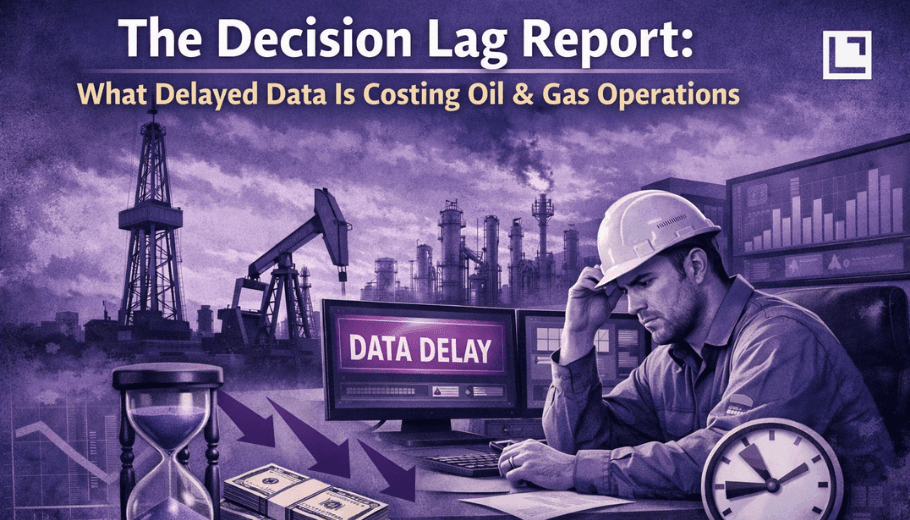
The Decision Lag Report
What Delayed Data is Costing OG Operations
{ "@context": "https://schema.org", "@graph": [ { "@type": ["BlogPosting", "Report"], "@id": "https://www.data2.ai/resources/the-decision-lag-report#article", "isPartOf": { "@id": "https://www.data2.ai/resources/the-decision-lag-report#webpage" }, "mainEntityOfPage": { "@id": "https://www.data2.ai/resources/the-decision-lag-report#webpage" }, "headline": "The Decision Lag Report", "name": "The Decision Lag Report", "description": "Decision lag, the gap between an event and action, quietly drains margin. See the numbers, why tech spend hasn't fixed it, and how to close the gap.", "abstract": "Decision lag is the distance between when something happens in an operation and when the right person has the information to act on it. This report quantifies its cost across field operations, capital allocation, and AI initiatives, explains why heavy technology investment has not closed the gap, and describes what closing it actually requires.", "inLanguage": "en-US", "url": "https://www.data2.ai/resources/the-decision-lag-report", "datePublished": "2026-03-16", "dateModified": "2026-03-16", "isAccessibleForFree": true, "author": { "@id": "https://www.data2.ai/#organization" }, "publisher": { "@id": "https://www.data2.ai/#organization" }, "image": { "@id": "https://www.data2.ai/resources/the-decision-lag-report#primaryimage" }, "thumbnailUrl": "https://framerusercontent.com/images/lTh3h15OK94IDShhMdnX1HPg.png", "articleSection": "Articles", "keywords": [ "decision lag", "unplanned downtime", "capital allocation efficiency", "reporting latency", "operational data silos", "enterprise AI readiness", "real-time visibility", "decision intelligence", "oil and gas operations" ], "about": [ { "@type": "Thing", "name": "Decision lag" }, { "@type": "Thing", "name": "Unplanned downtime" }, { "@type": "Thing", "name": "Capital allocation" }, { "@type": "Thing", "name": "Data integration" }, { "@type": "Thing", "name": "Enterprise artificial intelligence" }, { "@type": "Thing", "name": "Decision intelligence" } ], "audience": { "@type": "BusinessAudience", "name": "Operations, finance, and technology executives at asset-intensive operators", "audienceType": "Energy and industrial operations leadership" }, "mentions": [ { "@type": "Thing", "name": "SCADA" }, { "@type": "Thing", "name": "Data historian" }, { "@type": "Thing", "name": "Enterprise resource planning" }, { "@type": "Thing", "name": "Large language model" }, { "@type": "Thing", "name": "Digital transformation" } ], "citation": [ { "@type": "Quotation", "text": "Decision lag is the distance between when something happens in your operation and when the right person has the information to act on it." }, { "@type": "Quotation", "text": "Fragmented systems, inconsistent data quality, multi-model data, and reporting delays don't disappear because a language model is sitting on top of them. They produce faster, more confident wrong answers." } ], "hasPart": [ { "@type": "WebPageElement", "name": "What Decision Lag Actually Is", "description": "As operations grow more complex across multiple assets and systems, the time between an event occurring and awareness of it expands, forcing teams to manually reconcile data from seven to twelve separate systems." }, { "@type": "WebPageElement", "name": "In the Field: Before the Failure Happens", "description": "72% of unplanned downtime events contain detectable warning signs already present in existing systems, yet the infrastructure to surface and act on them does not exist — at a cost of $250,000 to $1.5 million per incident." }, { "@type": "WebPageElement", "name": "In the Boardroom: When Capital Gets Allocated", "description": "Capital allocation relies on asset performance data that is weeks or months old. Operators with real-time visibility allocate capital 23% more efficiently than those using periodic reporting." }, { "@type": "WebPageElement", "name": "In the AI Initiative: Where Boards Are Placing Big Bets", "description": "Fragmented systems, inconsistent data quality, and reporting delays do not disappear because a language model sits on top of them — they produce faster, more confident wrong answers." }, { "@type": "WebPageElement", "name": "The Numbers Behind the Problem", "description": "24 to 72 hour reporting lag, 6 to 14 hours to build a standard performance report, 7 to 12 systems reconciled manually per report, and 2 to 4% production efficiency lost to reactive decision-making." }, { "@type": "WebPageElement", "name": "Why Heavy Technology Investment Hasn't Fixed It", "description": "Systems were designed to record rather than connect, data teams spend 60 to 80% of capacity on preparation instead of analysis, and digital transformation outpaces foundational infrastructure." }, { "@type": "WebPageElement", "name": "What Closing the Gap Actually Looks Like", "description": "Leading operators invest first in unified, real-time data environments connecting all systems, achieving minute-level reporting and reliable AI deployment." }, { "@type": "WebPageElement", "name": "This Is the Problem data² Was Built to Solve", "description": "data² connects fragmented operational and financial systems into a governed, explainable decision layer that closes the gap between event and action." } ] }, { "@type": "WebPage", "@id": "https://www.data2.ai/resources/the-decision-lag-report#webpage", "url": "https://www.data2.ai/resources/the-decision-lag-report", "name": "The Decision Lag Report | data²", "description": "Decision lag, the gap between an event and action, quietly drains margin. See the numbers, why tech spend hasn't fixed it, and how to close the gap.", "isPartOf": { "@id": "https://www.data2.ai/#website" }, "primaryImageOfPage": { "@id": "https://www.data2.ai/resources/the-decision-lag-report#primaryimage" }, "datePublished": "2026-03-16", "dateModified": "2026-03-16", "inLanguage": "en-US", "breadcrumb": { "@id": "https://www.data2.ai/resources/the-decision-lag-report#breadcrumb" } }, { "@type": "ImageObject", "@id": "https://www.data2.ai/resources/the-decision-lag-report#primaryimage", "url": "https://framerusercontent.com/images/lTh3h15OK94IDShhMdnX1HPg.png", "contentUrl": "https://framerusercontent.com/images/lTh3h15OK94IDShhMdnX1HPg.png", "width": 910, "height": 520, "caption": "The Decision Lag Report — quantifying the gap between when an event happens and when someone can act on it" }, { "@type": "BreadcrumbList", "@id": "https://www.data2.ai/resources/the-decision-lag-report#breadcrumb", "itemListElement": [ { "@type": "ListItem", "position": 1, "name": "Home", "item": "https://www.data2.ai/" }, { "@type": "ListItem", "position": 2, "name": "Resources", "item": "https://www.data2.ai/resources" }, { "@type": "ListItem", "position": 3, "name": "The Decision Lag Report" } ] }, { "@type": "WebSite", "@id": "https://www.data2.ai/#website", "url": "https://www.data2.ai/", "name": "data²", "publisher": { "@id": "https://www.data2.ai/#organization" }, "inLanguage": "en-US" }, { "@type": "Organization", "@id": "https://www.data2.ai/#organization", "name": "data²", "legalName": "Data Squared USA Inc.", "alternateName": "Data Squared", "url": "https://www.data2.ai/", "slogan": "AI you can verify. Decisions you can defend.", "description": "data² builds evidence-grade decision intelligence for the enterprise, connecting siloed data into governed knowledge graphs with explainable, auditable AI.", "logo": { "@type": "ImageObject", "@id": "https://www.data2.ai/#logo", "url": "https://www.data2.ai/favicon.png" }, "image": { "@id": "https://www.data2.ai/#logo" }, "founder": [ { "@id": "https://www.data2.ai/#jon-brewton" }, { "@id": "https://www.data2.ai/#jeff-dalgliesh" } ], "sameAs": [ "https://www.linkedin.com/company/data2us/", "https://www.youtube.com/@Data2ai" ] }, { "@type": "Person", "@id": "https://www.data2.ai/#jon-brewton", "name": "Jon Brewton", "jobTitle": "Co-Founder and Chief Executive Officer", "worksFor": { "@id": "https://www.data2.ai/#organization" } }, { "@type": "Person", "@id": "https://www.data2.ai/#jeff-dalgliesh", "name": "Jeff Dalgliesh", "jobTitle": "Co-Founder", "worksFor": { "@id": "https://www.data2.ai/#organization" } }, { "@type": "DefinedTerm", "@id": "https://www.data2.ai/#decision-lag", "name": "Decision lag", "description": "The distance between when something happens in your operation and when the right person has the information to act on it.", "inDefinedTermSet": { "@type": "DefinedTermSet", "name": "data² decision intelligence glossary", "url": "https://www.data2.ai/resources" } } ] }

data² Welcomes Marty Teevan as Strategic Advisor
Announcing new strategic advisor
<script type="application/ld+json"> { "@context": "https://schema.org", "@graph": [ { "@type": "NewsArticle", "@id": "https://www.data2.ai/resources/data²-welcomes-marty-teevan-as-strategic-advisor#article", "isPartOf": { "@id": "https://www.data2.ai/resources/data²-welcomes-marty-teevan-as-strategic-advisor#webpage" }, "mainEntityOfPage": "https://www.data2.ai/resources/data²-welcomes-marty-teevan-as-strategic-advisor", "headline": "data² Welcomes Marty Teevan as Strategic Advisor", "description": "Capital markets veteran Marty Teevan—ex-UBS and Goldman Sachs—joins data² as Strategic Advisor to support growth of the reView platform.", "image": { "@type": "ImageObject", "url": "https://framerusercontent.com/images/nNdeYu5QMuRgfqdCZtN6ZRzoPOQ.png?width=910&height=520", "width": 910, "height": 520 }, "datePublished": "2025-12-14T09:00:00-05:00", "dateModified": "2025-12-14T09:00:00-05:00", "author": { "@type": "Organization", "name": "data²", "url": "https://www.data2.ai/" }, "publisher": { "@id": "https://www.data2.ai/#organization" }, "about": [ { "@type": "Person", "name": "Marty Teevan", "jobTitle": "Strategic Advisor", "description": "Capital markets veteran with 30+ years of experience, including leadership roles at UBS and Goldman Sachs; founder of Sheehan Finance.", "worksFor": { "@id": "https://www.data2.ai/#organization" } }, { "@type": "SoftwareApplication", "name": "reView", "applicationCategory": "BusinessApplication" } ], "mentions": [ { "@id": "https://www.data2.ai/#organization" }, { "@type": "Organization", "name": "UBS" }, { "@type": "Organization", "name": "Goldman Sachs" }, { "@type": "Organization", "name": "Sheehan Finance" } ] }, { "@type": "Organization", "@id": "https://www.data2.ai/#organization", "name": "data²", "url": "https://www.data2.ai/", "sameAs": [ "https://www.linkedin.com/company/data2us/", "https://www.youtube.com/@Data2ai" ] } ] } </script>
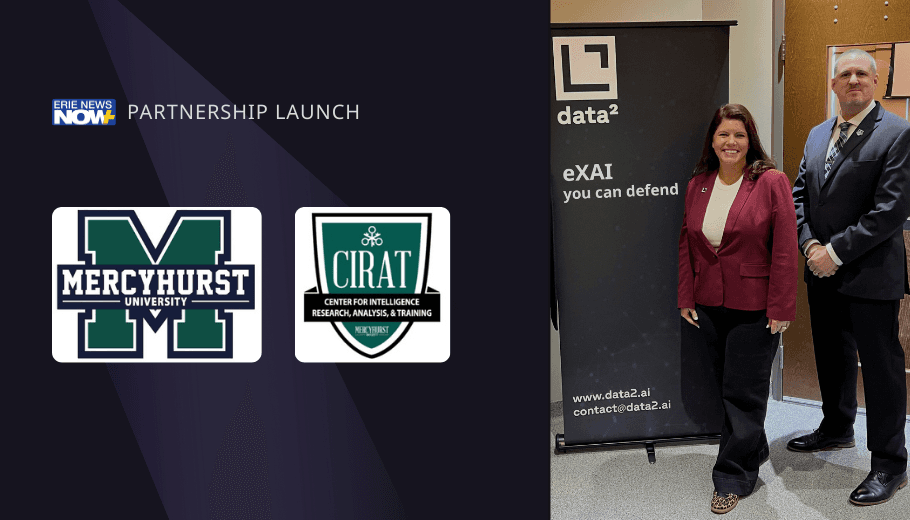
Empowering the Next Generation of Intelligence Analysts
Partnership Launch with Mercyhurst University
<script type="application/ld+json"> { "@context": "https://schema.org", "@graph": [ { "@type": "NewsArticle", "@id": "https://www.data2.ai/resources/empowering-the-next-generation-of-intelligence-analysts#article", "isPartOf": { "@id": "https://www.data2.ai/resources/empowering-the-next-generation-of-intelligence-analysts#webpage" }, "mainEntityOfPage": "https://www.data2.ai/resources/empowering-the-next-generation-of-intelligence-analysts", "headline": "Empowering the Next Generation of Intelligence Analysts", "description": "data² partners with Mercyhurst University's CIRAT to bring reView and explainable AI to the next generation of intelligence analysts.", "image": { "@type": "ImageObject", "url": "https://framerusercontent.com/images/464DLS3kdu5KCT4UMK1flZ6QNq8.png?width=910&height=520", "width": 910, "height": 520 }, "datePublished": "2025-12-14T09:00:00-05:00", "dateModified": "2025-12-14T09:00:00-05:00", "author": { "@type": "Organization", "name": "data²", "url": "https://www.data2.ai/" }, "publisher": { "@id": "https://www.data2.ai/#organization" }, "about": [ { "@type": "Thing", "name": "Intelligence analysis" }, { "@type": "Thing", "name": "Explainable AI" }, { "@type": "SoftwareApplication", "name": "reView", "applicationCategory": "BusinessApplication" } ], "mentions": [ { "@id": "https://www.data2.ai/#organization" }, { "@type": "CollegeOrUniversity", "name": "Mercyhurst University" }, { "@type": "Organization", "name": "Center for Intelligence Research, Analysis and Training (CIRAT)" }, { "@type": "Thing", "name": "GraphRAG" }, { "@type": "Thing", "name": "Decision Intelligence" } ] }, { "@type": "Organization", "@id": "https://www.data2.ai/#organization", "name": "data²", "url": "https://www.data2.ai/", "sameAs": [ "https://www.linkedin.com/company/data2us/", "https://www.youtube.com/@Data2ai" ] } ] } </script>
Make Analytics Great Again™
The data² Framework for Decision Intelligence
<script type="application/ld+json"> { "@context": "https://schema.org", "@graph": [ { "@type": "Article", "@id": "https://www.data2.ai/resources/make-analytics-great-again™#article", "isPartOf": { "@id": "https://www.data2.ai/resources/make-analytics-great-again™#webpage" }, "mainEntityOfPage": "https://www.data2.ai/resources/make-analytics-great-again™", "headline": "Make Analytics Great Again™", "description": "The problem isn't a lack of analytics—it's a lack of trust. See how data² unifies fragmented data into explainable, defensible decision intelligence.", "image": { "@type": "ImageObject", "url": "https://framerusercontent.com/images/kGHseE1RYJQ0boCDkZDnQ53DWg.png?width=910&height=520", "width": 910, "height": 520 }, "datePublished": "2025-12-14T09:00:00-05:00", "dateModified": "2025-12-14T09:00:00-05:00", "author": { "@type": "Organization", "name": "data²", "url": "https://www.data2.ai/" }, "publisher": { "@id": "https://www.data2.ai/#organization" }, "about": [ { "@type": "Thing", "name": "Trusted analytics" }, { "@type": "Thing", "name": "Decision Intelligence" }, { "@type": "SoftwareApplication", "name": "reView", "applicationCategory": "BusinessApplication" } ], "mentions": [ { "@id": "https://www.data2.ai/#organization" }, { "@type": "Thing", "name": "Business intelligence" }, { "@type": "Thing", "name": "Data fragmentation" }, { "@type": "Thing", "name": "Explainable AI" }, { "@type": "Thing", "name": "Graph-native AI" } ] }, { "@type": "Organization", "@id": "https://www.data2.ai/#organization", "name": "data²", "url": "https://www.data2.ai/", "sameAs": [ "https://www.linkedin.com/company/data2us/", "https://www.youtube.com/@Data2ai" ] } ] } </script>
Why Most AI Fails at Scale
The Data-Layer Problem Holding AI Back
<script type="application/ld+json"> { "@context": "https://schema.org", "@graph": [ { "@type": "Article", "@id": "https://www.data2.ai/resources/why-most-ai-fails-at-scale#article", "isPartOf": { "@id": "https://www.data2.ai/resources/why-most-ai-fails-at-scale#webpage" }, "mainEntityOfPage": "https://www.data2.ai/resources/why-most-ai-fails-at-scale", "headline": "Why Most AI Fails at Scale", "description": "data² CEO Jon Brewton on why most enterprise AI fails at scale—it's fragmentation, not compute—and how connected, explainable AI hits 10x ROI.", "image": { "@type": "ImageObject", "url": "https://framerusercontent.com/images/TKDuRDdI10QqLb8Kv9LHjZZMic4.jpg?width=910&height=520", "width": 910, "height": 520 }, "datePublished": "2025-12-14T09:00:00-05:00", "dateModified": "2025-12-14T09:00:00-05:00", "author": { "@type": "Person", "name": "Jon Brewton", "jobTitle": "CEO", "worksFor": { "@id": "https://www.data2.ai/#organization" } }, "publisher": { "@id": "https://www.data2.ai/#organization" }, "about": [ { "@type": "Thing", "name": "Enterprise AI" }, { "@type": "Thing", "name": "Explainable AI" }, { "@type": "SoftwareApplication", "name": "reView", "applicationCategory": "BusinessApplication" } ], "mentions": [ { "@id": "https://www.data2.ai/#organization" }, { "@type": "PodcastSeries", "name": "National Energy Talk" }, { "@type": "Thing", "name": "Enterprise fragmentation" }, { "@type": "Thing", "name": "Graph-native AI" }, { "@type": "Thing", "name": "Decision Intelligence" } ] }, { "@type": "Organization", "@id": "https://www.data2.ai/#organization", "name": "data²", "url": "https://www.data2.ai/", "sameAs": [ "https://www.linkedin.com/company/data2us/", "https://www.youtube.com/@Data2ai" ] } ] } </script>
The First Patented AI Built for Decision Intelligence
Explainable AI Built for Regulated Industries
<script type="application/ld+json"> { "@context": "https://schema.org", "@graph": [ { "@type": "Article", "@id": "https://www.data2.ai/resources/whats-new#article", "isPartOf": { "@id": "https://www.data2.ai/resources/whats-new#webpage" }, "mainEntityOfPage": "https://www.data2.ai/resources/whats-new", "headline": "The First Patented AI Built for Decision Intelligence", "description": "data² CEO Jon Brewton on the first patented AI for decision intelligence: hallucination-resistant, explainable, and defensible under audit.", "image": { "@type": "ImageObject", "url": "https://framerusercontent.com/images/ENz0kdxpEOinRo0IlLSYD7nwXY.webp?width=910&height=520", "width": 910, "height": 520 }, "datePublished": "2025-12-14T09:00:00-05:00", "dateModified": "2025-12-14T09:00:00-05:00", "author": { "@type": "Person", "name": "Jon Brewton", "jobTitle": "CEO", "worksFor": { "@id": "https://www.data2.ai/#organization" } }, "publisher": { "@id": "https://www.data2.ai/#organization" }, "about": [ { "@type": "Thing", "name": "Decision Intelligence" }, { "@type": "Thing", "name": "Explainable AI" }, { "@type": "SoftwareApplication", "name": "reView", "applicationCategory": "BusinessApplication" } ], "mentions": [ { "@id": "https://www.data2.ai/#organization" }, { "@type": "PodcastSeries", "name": "National Energy Talk" }, { "@type": "Thing", "name": "US Patent US012339839B2" }, { "@type": "Thing", "name": "Hallucination-resistant AI" }, { "@type": "Thing", "name": "Regulated industries" } ] }, { "@type": "Organization", "@id": "https://www.data2.ai/#organization", "name": "data²", "url": "https://www.data2.ai/", "sameAs": [ "https://www.linkedin.com/company/data2us/", "https://www.youtube.com/@Data2ai" ] } ] } </script>
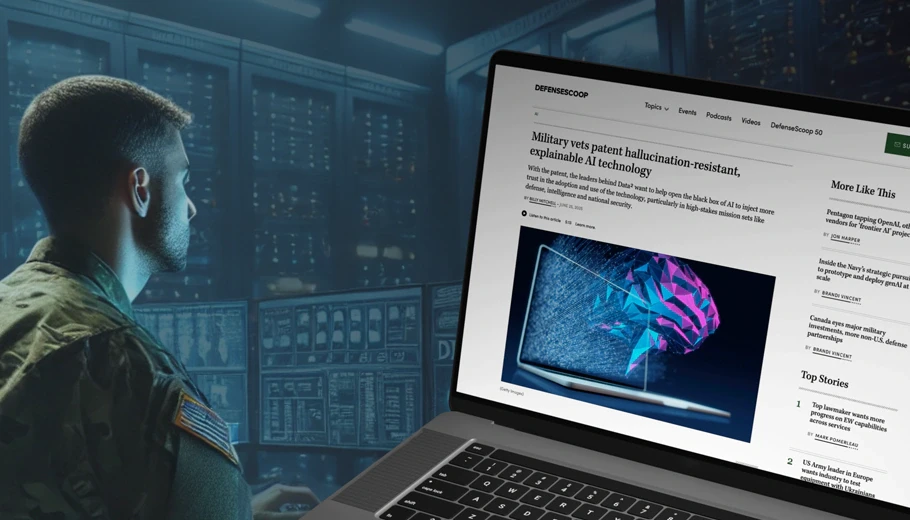
Hallucination-Resistant AI Built for the Real World
Patented Explainable AI for High-Stakes Use
<script type="application/ld+json"> { "@context": "https://schema.org", "@graph": [ { "@type": "Article", "@id": "https://www.data2.ai/resources/getting-started#article", "isPartOf": { "@id": "https://www.data2.ai/resources/getting-started#webpage" }, "mainEntityOfPage": "https://www.data2.ai/resources/getting-started", "headline": "Hallucination-Resistant AI Built for the Real World", "description": "data²'s patented, hallucination-resistant AI grounds every answer in traceable evidence—built for defense, intelligence, and regulated sectors.", "image": { "@type": "ImageObject", "url": "https://framerusercontent.com/images/Ojnz99xz9IAfGhjPD7THt1M3bQ.webp?width=910&height=520", "width": 910, "height": 520 }, "datePublished": "2025-12-14T09:00:00-05:00", "dateModified": "2025-12-14T09:00:00-05:00", "author": { "@type": "Organization", "name": "data²", "url": "https://www.data2.ai/" }, "publisher": { "@id": "https://www.data2.ai/#organization" }, "about": [ { "@type": "Thing", "name": "Hallucination-resistant AI" }, { "@type": "Thing", "name": "Explainable AI" }, { "@type": "SoftwareApplication", "name": "reView", "applicationCategory": "BusinessApplication" } ], "mentions": [ { "@id": "https://www.data2.ai/#organization" }, { "@type": "NewsMediaOrganization", "name": "DefenseScoop" }, { "@type": "Organization", "name": "Memgraph" }, { "@type": "Thing", "name": "US Patent US012339839B2" }, { "@type": "Thing", "name": "Air-gapped deployment" } ] }, { "@type": "Organization", "@id": "https://www.data2.ai/#organization", "name": "data²", "url": "https://www.data2.ai/", "sameAs": [ "https://www.linkedin.com/company/data2us/", "https://www.youtube.com/@Data2ai" ] } ] } </script>

Pursue Smarter Solutions to Secure Northern Border
Clear, Verifiable AI for Border Security
<script type="application/ld+json"> { "@context": "https://schema.org", "@graph": [ { "@type": "OpinionNewsArticle", "@id": "https://www.data2.ai/resources/importing-content#article", "isPartOf": { "@id": "https://www.data2.ai/resources/importing-content#webpage" }, "mainEntityOfPage": "https://www.data2.ai/resources/importing-content", "headline": "Pursue Smarter Solutions to Secure Northern Border", "description": "data² CEO Jon Brewton on securing the Northern Border: the problem isn't a lack of data, it's a lack of clarity—and explainable AI can close the gap.", "image": { "@type": "ImageObject", "url": "https://framerusercontent.com/images/WabVjzWO23WFwH4YY2S22SLW2ak.webp?width=910&height=520", "width": 910, "height": 520 }, "datePublished": "2025-12-14T09:00:00-05:00", "dateModified": "2025-12-14T09:00:00-05:00", "author": { "@type": "Person", "name": "Jon Brewton", "jobTitle": "CEO", "worksFor": { "@id": "https://www.data2.ai/#organization" } }, "publisher": { "@id": "https://www.data2.ai/#organization" }, "about": [ { "@type": "Thing", "name": "Northern Border security" }, { "@type": "Thing", "name": "Explainable AI" }, { "@type": "SoftwareApplication", "name": "reView", "applicationCategory": "BusinessApplication" } ], "mentions": [ { "@id": "https://www.data2.ai/#organization" }, { "@type": "NewsMediaOrganization", "name": "The Detroit News" }, { "@type": "Thing", "name": "Intelligence analysis" }, { "@type": "Thing", "name": "Decision Intelligence" } ] }, { "@type": "Organization", "@id": "https://www.data2.ai/#organization", "name": "data²", "url": "https://www.data2.ai/", "sameAs": [ "https://www.linkedin.com/company/data2us/", "https://www.youtube.com/@Data2ai" ] } ] } </script>
A Quiet Crisis at the Northern Border
When Manpower Alone Isn't Enough
<script type="application/ld+json"> { "@context": "https://schema.org", "@graph": [ { "@type": "Article", "@id": "https://www.data2.ai/resources/styling-elements#article", "isPartOf": { "@id": "https://www.data2.ai/resources/styling-elements#webpage" }, "mainEntityOfPage": "https://www.data2.ai/resources/styling-elements", "headline": "A Quiet Crisis at the Northern Border", "description": "5,500 miles, lightly monitored: data² CEO Jon Brewton on the U.S.–Canada border security gap—and how explainable AI can act as a force multiplier.", "image": { "@type": "ImageObject", "url": "https://framerusercontent.com/images/87dBuxYQbn3xZsEoKJYr0WMjYk.webp?width=910&height=520", "width": 910, "height": 520 }, "datePublished": "2025-12-14T09:00:00-05:00", "dateModified": "2025-12-14T09:00:00-05:00", "author": { "@type": "Person", "name": "Jon Brewton", "jobTitle": "CEO", "worksFor": { "@id": "https://www.data2.ai/#organization" } }, "publisher": { "@id": "https://www.data2.ai/#organization" }, "about": [ { "@type": "Thing", "name": "U.S.\u2013Canada border security" }, { "@type": "Thing", "name": "Explainable AI" }, { "@type": "SoftwareApplication", "name": "reView", "applicationCategory": "BusinessApplication" } ], "mentions": [ { "@id": "https://www.data2.ai/#organization" }, { "@type": "NewsMediaOrganization", "name": "Fox News" }, { "@type": "Thing", "name": "Border surveillance" }, { "@type": "Thing", "name": "Connected intelligence" } ] }, { "@type": "Organization", "@id": "https://www.data2.ai/#organization", "name": "data²", "url": "https://www.data2.ai/", "sameAs": [ "https://www.linkedin.com/company/data2us/", "https://www.youtube.com/@Data2ai" ] } ] } </script>

data² Welcomes Mark A. Stansberry as Strategic Advisor
Announcing new strategic advisor
<script type="application/ld+json"> { "@context": "https://schema.org", "@graph": [ { "@type": "NewsArticle", "@id": "https://www.data2.ai/resources/data2-welcomes-mark-a.-stansberry-as-strategic-advisor#article", "isPartOf": { "@id": "https://www.data2.ai/resources/data2-welcomes-mark-a.-stansberry-as-strategic-advisor#webpage" }, "mainEntityOfPage": "https://www.data2.ai/resources/data2-welcomes-mark-a.-stansberry-as-strategic-advisor", "headline": "data2 Welcomes Mark A. Stansberry as Strategic Advisor", "description": "Energy expert and author Mark A. Stansberry, Chairman of The GTD Group, joins data² as Strategic Advisor to guide its decision intelligence mission.", "image": { "@type": "ImageObject", "url": "https://framerusercontent.com/images/wXyCyVksz5ia0VMo56PpHKr0.png?width=910&height=520", "width": 910, "height": 520 }, "datePublished": "2025-12-14T09:00:00-05:00", "dateModified": "2025-12-14T09:00:00-05:00", "author": { "@type": "Organization", "name": "data²", "url": "https://www.data2.ai/" }, "publisher": { "@id": "https://www.data2.ai/#organization" }, "about": [ { "@type": "Person", "name": "Mark A. Stansberry", "jobTitle": "Strategic Advisor", "description": "Energy expert, author, and business leader with over four decades of experience; Chairman of The GTD Group and author of America Needs America's Energy.", "worksFor": { "@id": "https://www.data2.ai/#organization" } }, { "@type": "SoftwareApplication", "name": "reView", "applicationCategory": "BusinessApplication" } ], "mentions": [ { "@id": "https://www.data2.ai/#organization" }, { "@type": "Organization", "name": "The GTD Group" }, { "@type": "PodcastSeries", "name": "National Energy Talk" }, { "@type": "Book", "name": "America Needs America's Energy" }, { "@type": "Thing", "name": "Decision Intelligence" } ] }, { "@type": "Organization", "@id": "https://www.data2.ai/#organization", "name": "data²", "url": "https://www.data2.ai/", "sameAs": [ "https://www.linkedin.com/company/data2us/", "https://www.youtube.com/@Data2ai" ] } ] } </script>

Welcome Suzette Kent to data²'s Board of Advisors
Announcing New Strategic Advisor
<script type="application/ld+json"> { "@context": "https://schema.org", "@graph": [ { "@type": "NewsArticle", "@id": "https://www.data2.ai/resources/welcome-suzette-kent-to-data2-s-board-of-advisors#article", "isPartOf": { "@id": "https://www.data2.ai/resources/welcome-suzette-kent-to-data2-s-board-of-advisors#webpage" }, "mainEntityOfPage": "https://www.data2.ai/resources/welcome-suzette-kent-to-data2-s-board-of-advisors", "headline": "Welcome Suzette Kent to data²'s Board of Advisors", "description": "Former US Federal CIO Suzette Kent joins data²'s Board of Advisors, bringing government and trustworthy-AI expertise to support the reView platform.", "image": { "@type": "ImageObject", "url": "https://framerusercontent.com/images/2X8zCRCocYZFqZbV2G8s4FUDa64.png?width=910&height=520", "width": 910, "height": 520 }, "datePublished": "2025-12-14T09:00:00-05:00", "dateModified": "2025-12-14T09:00:00-05:00", "author": { "@type": "Organization", "name": "data²", "url": "https://www.data2.ai/" }, "publisher": { "@id": "https://www.data2.ai/#organization" }, "about": [ { "@type": "Person", "name": "Suzette Kent", "jobTitle": "Member, Board of Advisors", "description": "Former U.S. Federal Chief Information Officer (2018–2020) with leadership experience at Accenture, EY, and JP Morgan; advises Dell, Intel, Adobe, and Rubrik.", "worksFor": { "@id": "https://www.data2.ai/#organization" } }, { "@type": "SoftwareApplication", "name": "reView", "applicationCategory": "BusinessApplication" } ], "mentions": [ { "@id": "https://www.data2.ai/#organization" }, { "@type": "Thing", "name": "Trustworthy AI" }, { "@type": "Organization", "name": "Accenture" }, { "@type": "Organization", "name": "EY" }, { "@type": "Organization", "name": "OECD" } ] }, { "@type": "Organization", "@id": "https://www.data2.ai/#organization", "name": "data²", "url": "https://www.data2.ai/", "sameAs": [ "https://www.linkedin.com/company/data2us/", "https://www.youtube.com/@Data2ai" ] } ] } </script>